For consulting arborists, the spec is the job.
If you're a consulting arborist, you already know this. You walk the property, you find what's wrong, and you write down what has to happen to which tree. Then somebody else does the work. The write-up is the product. For most of us it's a Word doc that goes out by email and comes back as three PDFs that don't line up.
I'm not a consulting arborist by title. I run plant health care on my own book in Upper Arlington. But a lot of what I write up, I don't do myself: the crane removal, the stump grinding, the big clearance job over the roof. So I'm on the sending end of this all the time, and this fall I built the part of ArbKeep that sends the work out and brings it back.
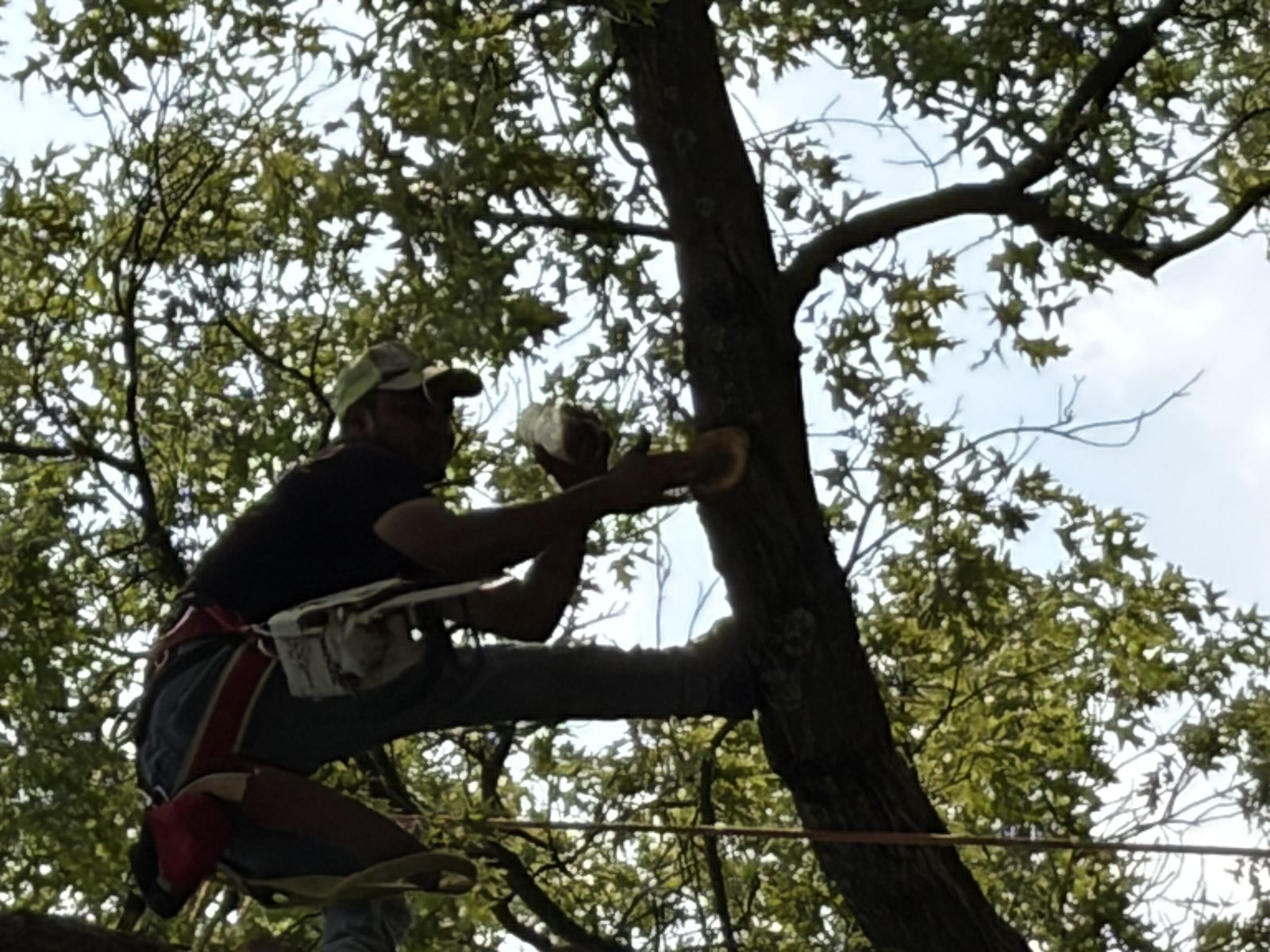
The spec comes from the walk.
In ArbKeep the spec isn't a separate document. It's the lines on the job, each one tied to the trees it's on, written from what you logged at the tree. Pick the lines you want priced. If the work isn't on a job yet, start one right from the request.
One link per contractor. No login.
Tick the contractors from your book and each one gets their own link. Send it from your own email, or have ArbKeep email it for you with your address as the reply-to, so their answer lands in your inbox.
The link opens on your logo and your name, the address, and a satellite map with only the asked trees pinned and numbered. Each line shows its trees and their DBH, and the photos you picked show whole. The contractor doesn't make an account. They price each line, firm or as a range, say how soon after award they can finish, attach their own estimate if they'd rather, and send.
If they have a question, they ask it on the link and it comes to you as an email. Reply the way you'd reply to anyone. And if the contractor runs ArbKeep too and takes referrals, the request also lands on their own book as a draft quote.
Ask for the papers up front.
Every request can ask for papers: the certificate of insurance, workers' comp, an ISA credential, TRAQ, a contractor or municipal license, or anything you type. Each one is due either with the bid, and the link won't send without it, or before award. A bid missing its insurance says so on the card, and accepting it warns you first.
Nobody should find out who was uninsured after the limb comes down.
Bids come back on the job, line for line.
A bid lands matched to the lines you asked about and tagged to the trees. Two bids on one job read side by side, line by line, with how soon each contractor can finish. If a bid prices work you didn't ask for, it says what your own record already has on that tree, like a removal you recommended in March. Got a paper estimate instead? Alex reads it onto the job, and nothing saves until you've checked it.
Every request keeps a trail on the job's paperwork: sent, emailed, opened, asked a question, bid in. No more wondering whether they ever looked at it. Need to send the whole thing to an insurer or a property manager? Download a bid as one zip, every file named for the contractor.
Ask Alex what a job will cost and it reads the bids first. It knows a bid is your cost, not the client's price.
You decide who bills.
Awarding a bid takes two taps, on purpose, and it asks who bills the client.
You bill. The bid becomes a sub cost on the job. Put their quote on a plan line and the client price is the quote plus your margin, a default percent from Settings or the line's own. The client sees one price.
They bill the owner. The job is marked billed outside ArbKeep, and the owner's billing contact goes to the contractor with the award.
Or put it in front of the homeowner. Share a bid and it shows on their ArbKeep Home with its lines, the bid sheet and the insurance papers. Your note, the PO number and who bills stay with you. They can tell you which one they'd go with, and if you allow it, award it themselves. If you're marking a bid up, don't share it. The page tells you that too.
The work comes back on the same link.
When the job's done, the contractor ticks the lines they finished, adds a photo or two of each, attaches the invoice and sends it back on the same link. One tap marks those lines done on your job. If you bill, the invoice replaces the estimate as the job's cost. If they bill the owner, ArbKeep can email the owner a copy of the invoice from your practice.
And the tree keeps it. Each tree's chart shows who bid what on it, when the work was done and the photos from that day. The next arborist on that property starts from the record, not from a phone call.
Come find me at ASCA.
You did the hard part at the tree. The rest should be a link, a trail and a record, not an evening of chasing emails.
I'll be at the ASCA Annual Conference in Long Beach, December 2–5. If you're a consulting arborist and you're going, find me. I want to hear how you write a spec and what you wish came back with the bid. Not going? Write me at [email protected]. It's me who answers.
Or try it on your own book. ArbKeep Pro is $100 a month, 14 days free, no card.
David All · Arborist in Upper Arlington, Ohio — by way of heritage apple orchards in Pennsylvania and old-growth conifers on the Olympic Peninsula. Builder of ArbKeep — the health record for trees. Featured in The Guardian. Ohio Chapter ISA member · Upper Arlington Tree Co.