Your software grew rings.
Open ArbKeep in the field and look at the bottom corner. There's a small glowing circle where the AI lives — purple crossing into green, breathing slowly. Look closer. It has rings.
That circle is a tree in cross-section, and it's yours. The moment an arborist's account exists, the software grows one: nine to seventeen rings. A pith that drifts the way the trunk leaned toward light. A drought year or two — sometimes three — pinched tight and inked a little darker. A heartwood core that runs warm or cool. Slightly oval, the way reaction wood squashes a trunk that's had to hold itself up against something.
It isn't a picture we drew. Nothing about it is stored and nothing about it is random — the account itself is the seed. Sign in on your phone at the base of a client's maple, or at the desk that evening: same tree. Open it ten years from now: same tree, still. Mine will never match yours.
A reasonable person asks: why would anyone bother doing that for a button?
The dispatch-center problem.
Because of what the rest of the shelf looks like. Software for tree companies has been built to match the aesthetic of a spreadsheet and a dispatch center — rows, statuses, tabs, a map with jobs pinned on it. That's not an accident of bad taste. It's an honest picture of who the software serves: the office. The dispatcher. The route. The estimate that has to go out by five. The tree appears in it exactly once, as the address where the job is.
ArbKeep is built for the other person — the one standing at the tree. Every design decision starts from there and works backward.
The cross-section is the point.
Arboriculture learned to see by looking inside. Alex Shigo — the Forest Service plant pathologist the modern discipline leans on — spent a career cutting trees open, thousands of them, and reading what the wood remembered: every wound, every hard season, every recovery, written in the rings. A trunk in cross-section is the truest record a tree keeps of itself.
ArbKeep is a health record for trees. So when the AI that reads a tree's whole chart needed a mark, we didn't invent an icon. We grew a cross-section.
Color that means something.
The palette works the same way — named from the field, and every color has a job. Lichen is the quiet green of things going fine. Honey means look at this soon. Staghorn red is spent on exactly one thing — danger — so when you see it, it's real. And elderberry belongs to Health: soil, tissue, pest, disease, treatment. When a surface turns elderberry, you're in the medicine zone.
Your eye learns that grammar in about a day, and after that the whole app reads at a glance. Which, at 2 p.m. in July, thirty feet from the truck, is the entire game. Color here is a clinical signal, not a paint job.
Fast everywhere, legible in the sun.
The pages are plain and light, served from the edge of the network near wherever you're standing, and they open like a light switch on a field phone. Nothing to install. And there's a floor on type size — nothing under twelve and a half pixels, anywhere — because the test environment isn't a conference room. It's full sun, one hand, work gloves.
Light theme, dark theme. A six-inch screen under the canopy at noon, a big monitor at the kitchen table that night. One instrument, drawn once, working everywhere you do.
Tools shape the work.
If the software looks like a dispatch board, every tree becomes a job on it. If it looks like a chart, every tree becomes a patient.
We think plant health care deserves an instrument — something closer to what a physician carries than what a dispatcher stares at. That's what all of it is for: the rings, the grammar of color, the type you can read in the sun. Design here isn't decoration laid over the product. It's the argument the product is making.
And the tree in the corner is there to keep us honest about who it's for. Yours will never match mine. That's the point.
See it grow one for you.
ArbKeep is built by a working arborist, with the arborists who run their practice on it. Free for 14 days, no card to start.
Build it with us →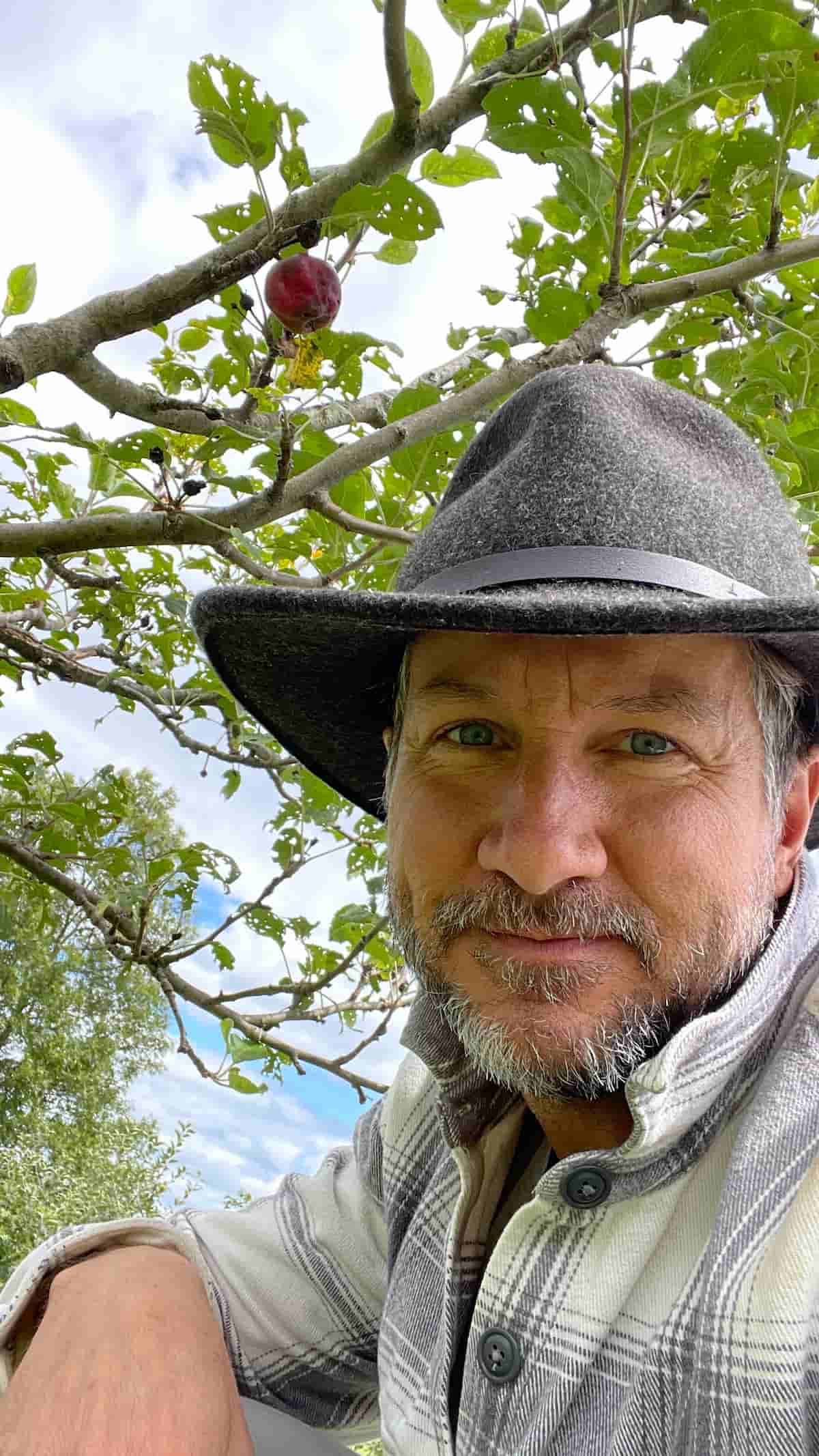
David All · Arborist in Upper Arlington, Ohio — by way of heritage apple orchards in Pennsylvania and old-growth conifers on the Olympic Peninsula. Builder of ArbKeep — the health record for trees. Featured in The Guardian. Ohio Chapter ISA member · Upper Arlington Tree Co.