The Borers in the Pin Oak
Most of what a borer does, it does in the dark. The larva lives sealed inside the tree — nothing to photograph — while it tunnels through the tissue that moves the tree's water. You almost never get to see one.
This pin oak in Upper Arlington announced its problem the loud way: in the middle of July, a storm took a big deadwood limb out of the canopy and put it on the homeowner's roof. That was the call — get it off, clean it up.
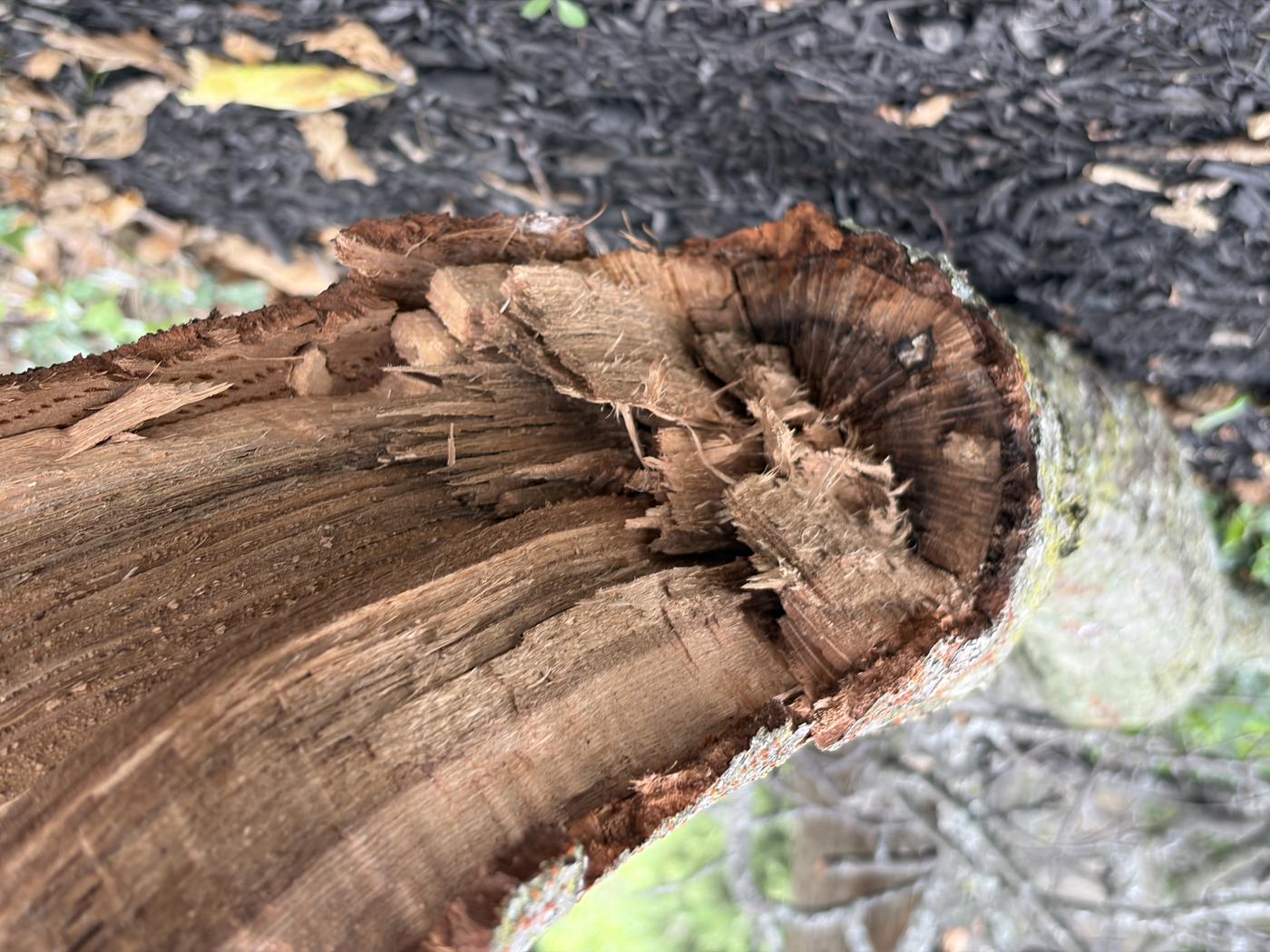
The autopsy
Before the cleanup, I opened the branch up — I pulled too many borers out of peach trees on the family orchard to leave a snapped oak limb unexamined. Under the bark: workings packed with frass, resident still at home.
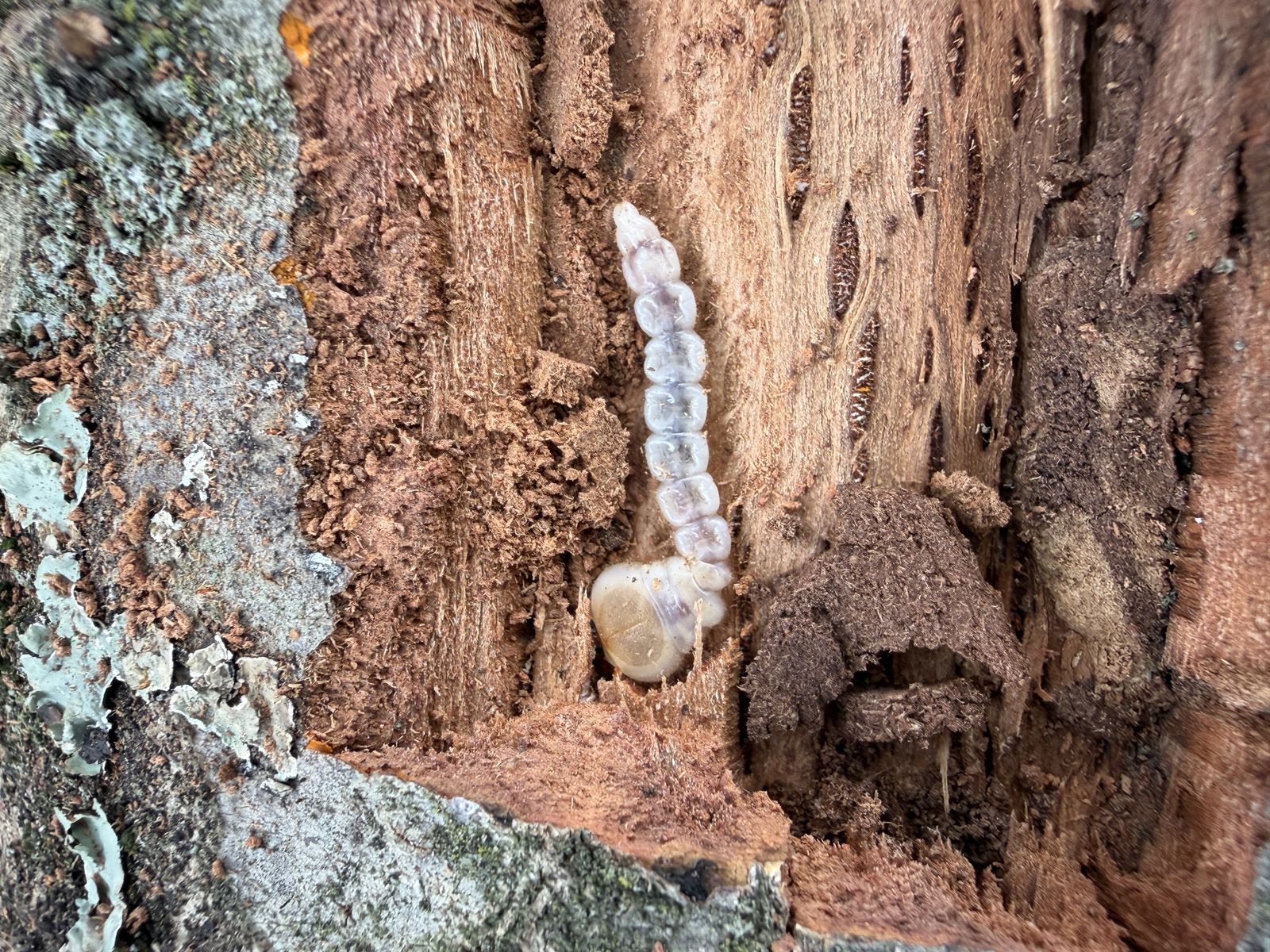
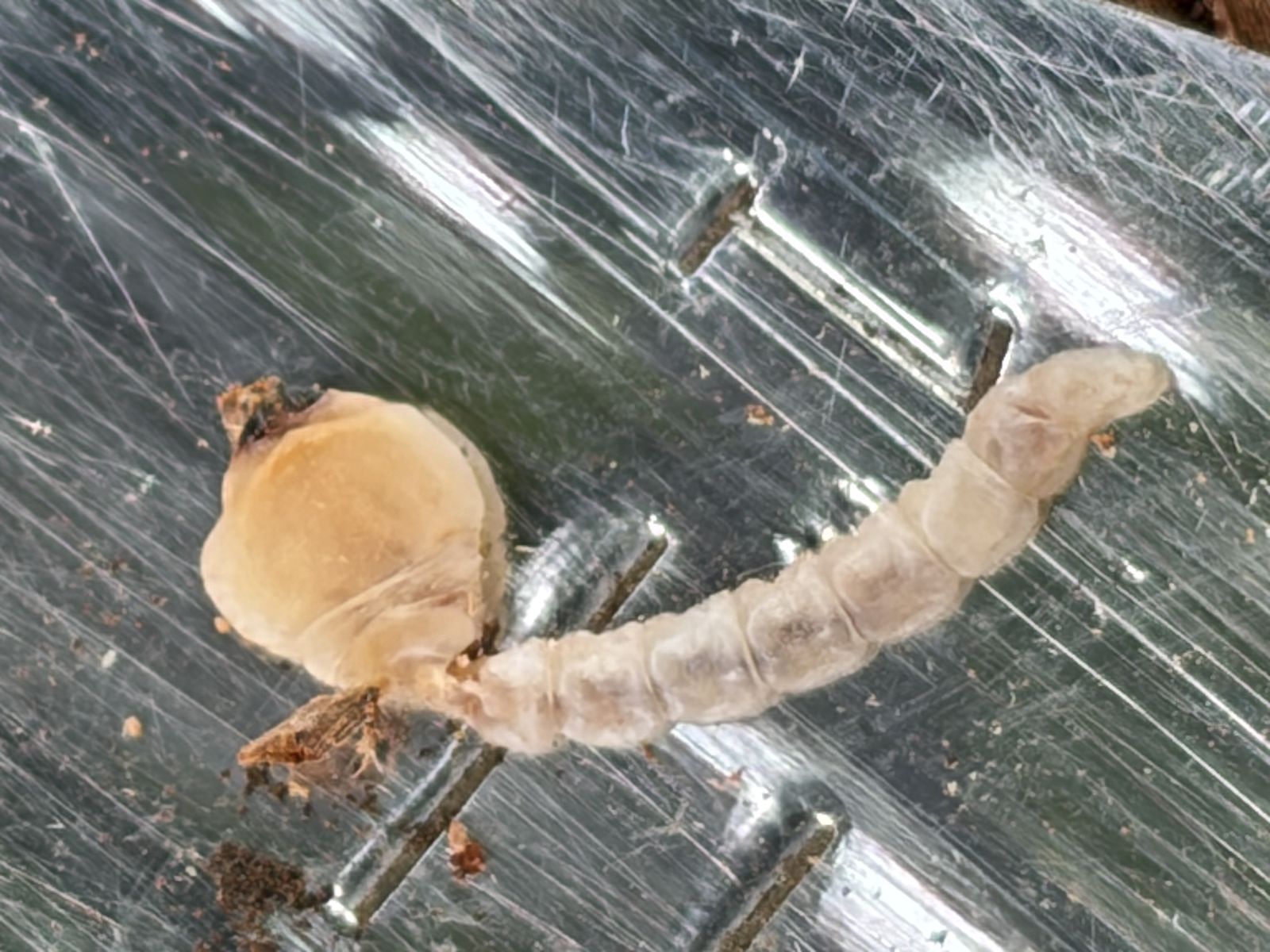
I pried it out and ran the photos through CanopyKeep, the free diagnosis tool we built. Under the free answer every homeowner gets sits a professional read — and it saw what the knife saw:
Active infestation of two-lined chestnut borer in a pin oak — typically indicating a tree under significant physiological stress. Late-instar larvae in the cambium suggest advanced vascular disruption that often leads to rapid canopy decline.
Committed, and checkable — it even names its own look-alike, with the test to tell them apart. My loupe leans toward that look-alike: Agrilus larvae carry a pair of dark pincers on the tail segment, and this one has none I can find. Either way, the tree-level story doesn't move: a flatheaded borer was girdling the cambium of a stressed oak.
The second tenant
The autopsy sent me looking, and a deadwood limb we pruned off the same oak gave up another larva — not the same animal, not even the same family. No coin disc up front: a robust cylinder, nose to tail. That's the other great clan of wood borers, the roundheaded — family Cerambycidae.
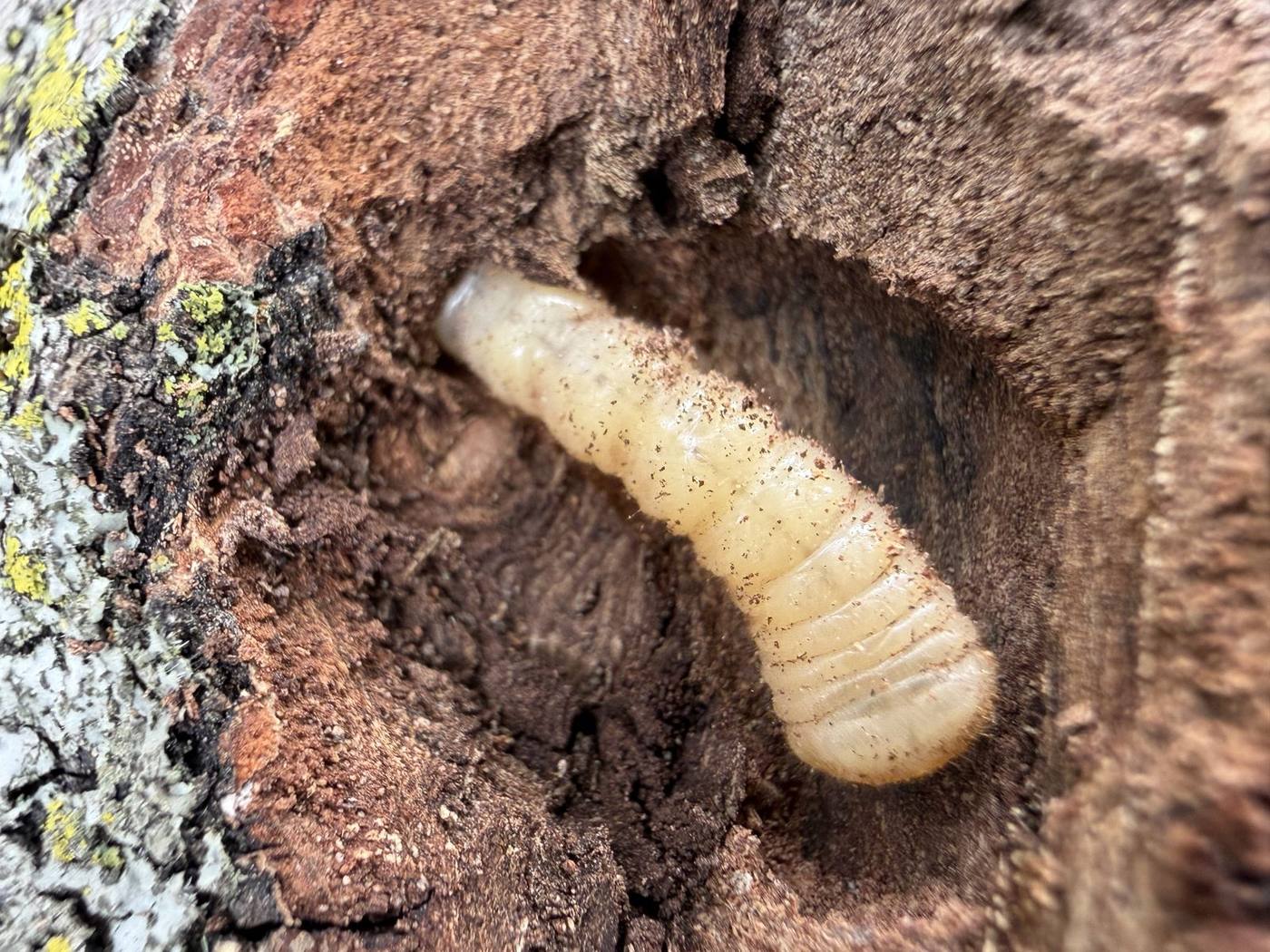
Its case, free read first:
Wood-boring beetle larva. That's a wood-boring beetle larva, likely a roundheaded borer. These grubs tunnel through the wood and the cambium, which is the tree's plumbing, eventually starving the branches above.
Keep the tree watered during dry spells to help it fight back. You need a pro to see how much damage is done and if systemic insecticides are worth the cost.
Finding a mature larva deep in the wood during August suggests a multi-year life cycle common in oak borers.
Right answer at the right altitude — named, taken seriously, one useful action, call an arborist. And the clinical read underneath it:
Active infestation of roundheaded borers (Cerambycidae) within the xylem — typically indicative of a tree under chronic physiological stress or declining vigor.
One oak, two borers
A stressed oak doesn't attract a species; it attracts the guild. Every opportunist in the neighborhood reads the same distress signal — here, a flatheaded borer in the cambium of one dead limb and a roundheaded borer deep in the wood of another. And notice that both reads, before they said anything about species, named the same root cause: stress. That's the diagnosis that matters, and it was never in doubt.
The machine blinked
One disclosure, because a case file that only keeps the hits is a highlight reel: when I ran the roundheaded larva's photo through a second time — the identical image — the clinical layer came back with the opposite family. The first run had it right. Only a hand that has held the larva knows which run to believe.
We learned this in April, watching Dr. Laura Deeter outkick this technology at every turn. Diagnosis is CanopyKeep's strong side — above ninety percent in field tests — but ninety percent blinks, and it doesn't tell you when. So every serious read lands on the same last step: call an arborist. If you don't have one, CanopyKeep can put you in touch through the ArbKeep Pro network — arborists who lead with Plant Health Care.
What happens to the tree
Borers like these are secondary — they take oaks that drought, compaction, or root damage weakened first. Two species on one tree doesn't mean two treatment plans; it means one stressed tree, and that's where the work goes: water through the dry spells, vigor above all, and an arborist's call — made under ANSI A300 Clause 14 — on whether a systemic insecticide earns its cost. And because this is an oak in July, every cut got sealed on the spot: fresh oak wounds attract the sap beetles (family Nitidulidae) that vector oak wilt. Deadwood cuts carry the lower risk. We seal them anyway.
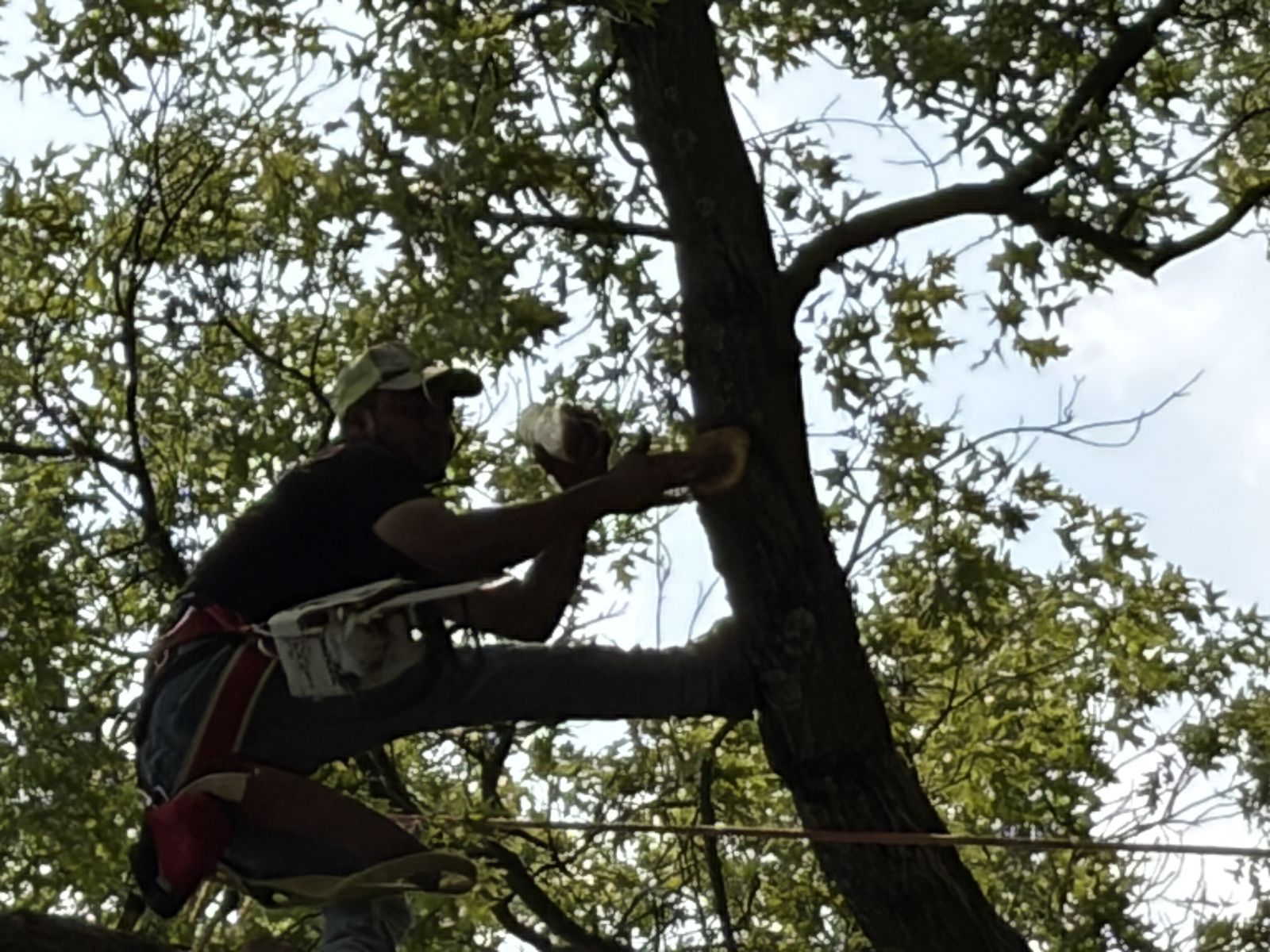
If something's living in your oak, CanopyKeep is free: snap a photo, get the read, hand it to your arborist. How the free tool and the professional layer fit together is on the CanopyKeep page — and if you're the arborist those homeowners call, ArbKeep Pro is built for you.
David All · Arborist in Upper Arlington, Ohio — by way of heritage apple orchards in Pennsylvania and old-growth conifers on the Olympic Peninsula. Builder of ArbKeep — the health record for trees. Featured in The Guardian. Ohio Chapter ISA member · Upper Arlington Tree Co.
ArbKeep is built by a working arborist, with a small founding group of arborists who'd rather sharpen a protocol than manage a crew. If that's you — and especially if you also write code, design, or do PHC science — come build it with us.